01Sign-up
Sign up and start.
The guest fills in their details on the touchscreen before playing. The lead enters the system already tied to their round, with consent recorded in the same step.
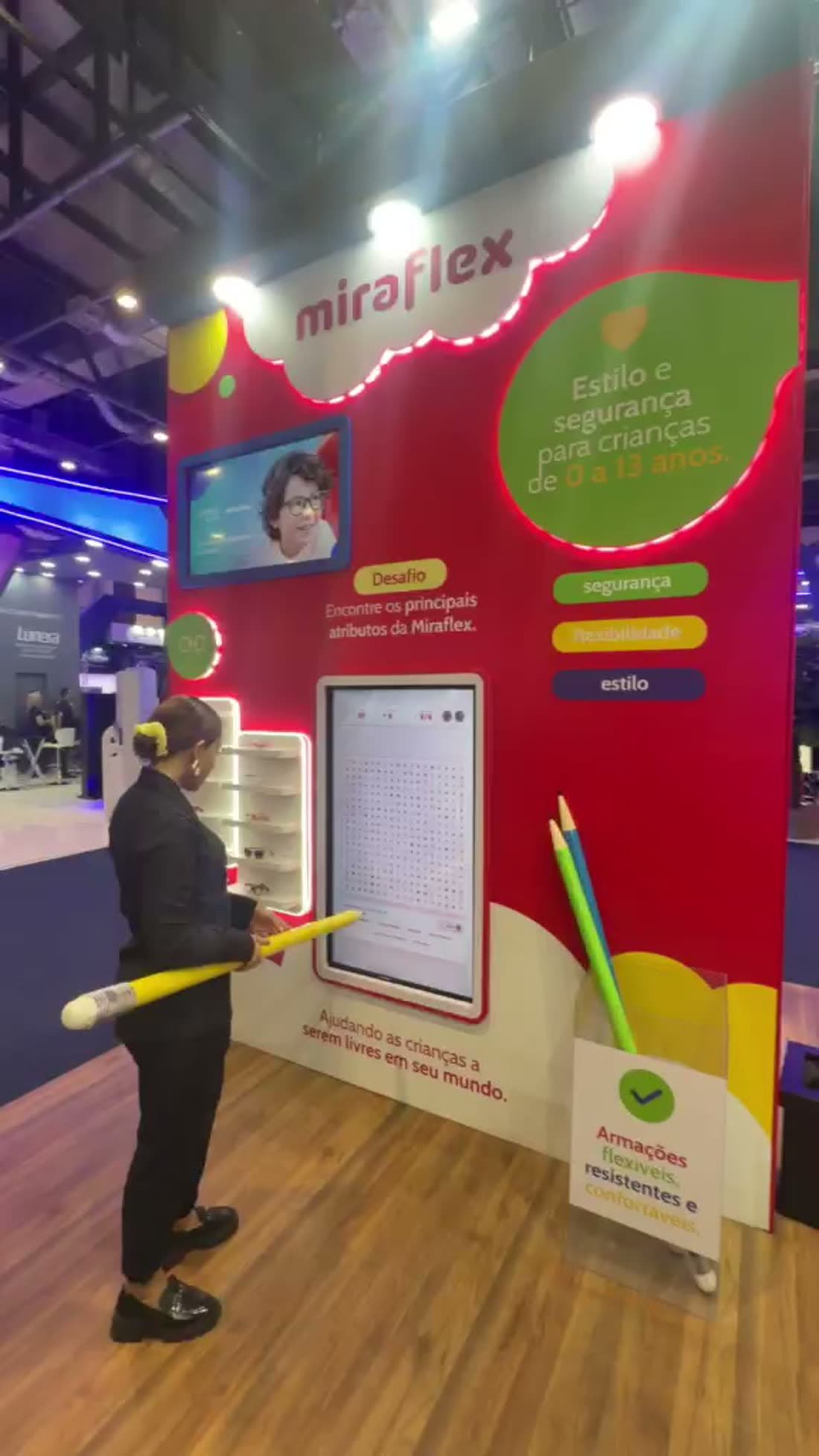
The words hidden in the grid are the brand attributes. To win, the guest has to find every one.
The copy nobody stops to read becomes the six words a guest spends a minute hunting on the screen. They leave the booth able to repeat the attributes, not because they read them, because they looked for them.
Every booth has a wall with the product differentials written on it. Almost nobody reads it. Here those differentials became the hidden words of a word search on a touchscreen: the guest signs up, gets sixty seconds and has to find all six to take the prize. The brand content comes in through the hand, not through reading.
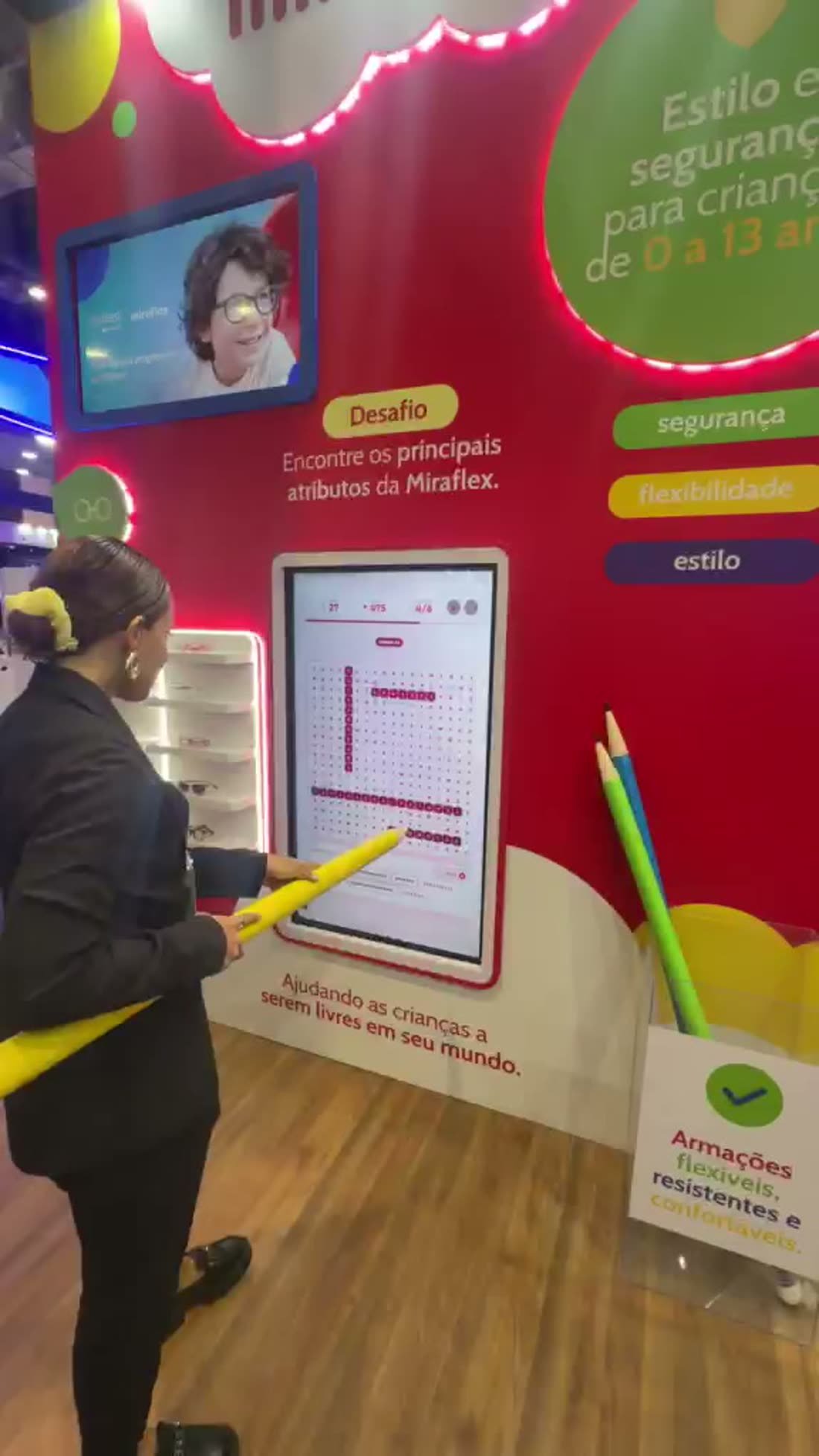
The round is short on purpose. What holds the activation up is not screen time, it is what the guest carries in their head and in their hand on the way out.
Safety, flexibility, style, comfort, quality, inclusion. Every word in the grid is an attribute the brand wants the audience to take away. Finding it is reading without noticing you read.
Instead of a finger, the guest plays with an oversized prop pencil. The gesture reads from far away, it turns into a photo, and it tells everyone walking by that something is happening there.
Whoever finds the six words inside the time wins a brand giveaway right there. It is the reason to play with attention, and what makes the guest call whoever came along to try too.
Three steps, all on the screen itself. No staffer typing for anyone and no paper form.
The guest fills in their details on the touchscreen before playing. The lead enters the system already tied to their round, with consent recorded in the same step.
The timer runs at the top of the screen next to the score and the word counter. Every word found lights up in the grid and adds points. A wrong pick does not end the turn: it takes time, which is what hurts.
At the end it shows how long they took, how many words they found and how many points they scored. Whoever completes the six goes to pick up the giveaway. Whoever does not almost always asks to play again.
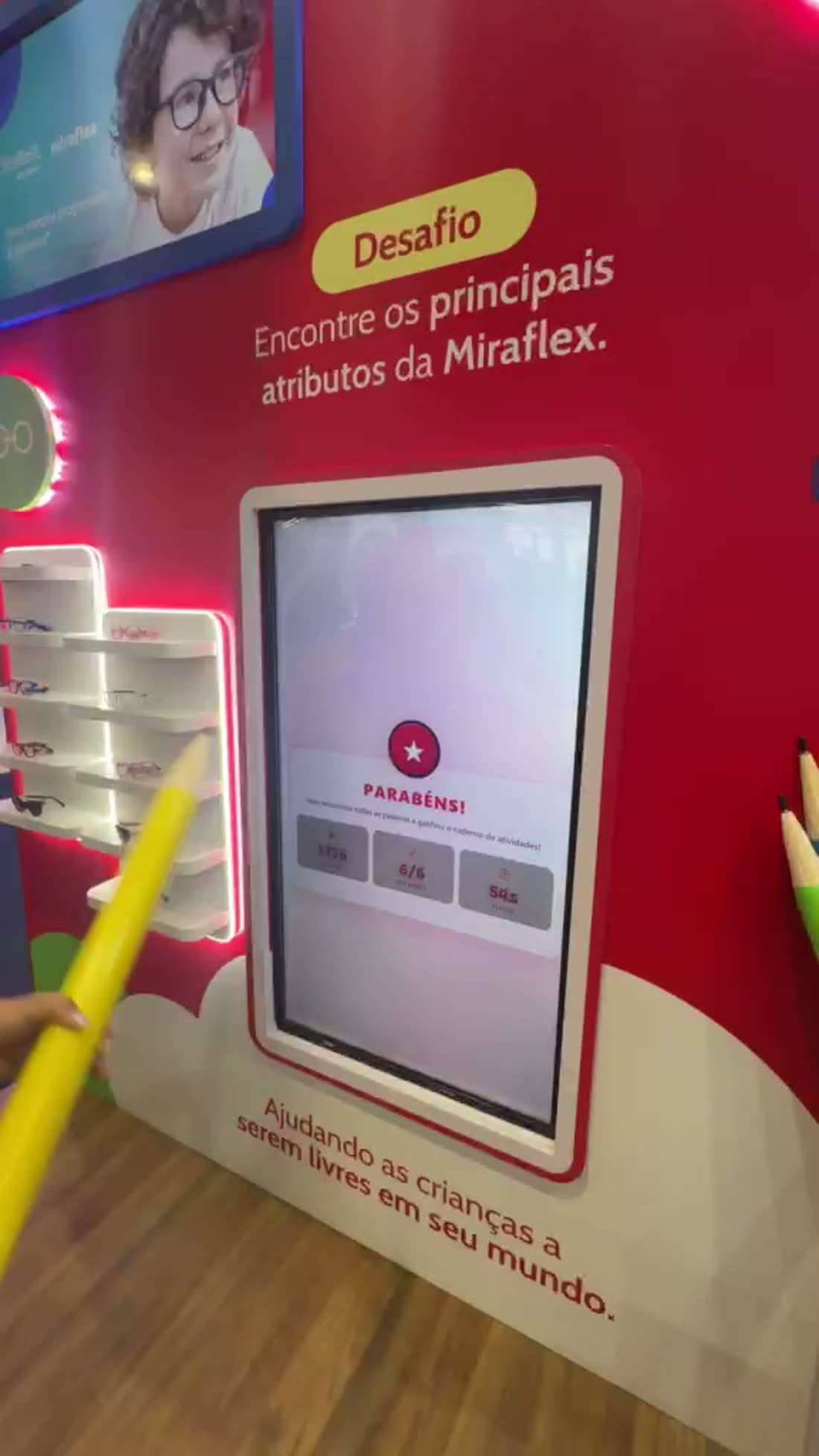
On this project, the scenography, the identity, and the concept were already in place, created by the agency Ziriguidum for Miraflex. T3i came in as the technology layer: built the game from scratch for that booth, designed every screen inside the visual identity that already existed and ran the system during the show. No screen ended up looking like generic software inside a carefully built set.
The grid, the words, the clock, the scoring and the prize rules were defined for this activation, not adapted from an off-the-shelf game.
Colors, typography, buttons and result screens follow the campaign guidelines. Players do not notice where the scenography ends and the software begins.
T3i stays with the activation during the event: system up, sign-ups coming in, prizes checked and adjustments on the spot if the dynamic calls for it.
The words in the grid are the brand briefing. Change the content and the whole activation changes, without changing the equipment.
Quiz with Prize Wheel: brand questions and prizes right after, with optional sign-up.
Memory Game: the guest flips pair after pair and memorizes the portfolio before the prize.
In Hand or On the Floor: a round of seconds, people gathered around and every piece of gear in the brand identity.
T3i builds the game with the words from your campaign, designs the screens in the project identity and runs the activation through the whole event. We work straight with the brand or as the agency's technology layer.